Rebuilding After a Houston Flood
A flood rebuild is a different project from a remodel, and it helps to know that going in.
September 2, 2026 · 4 min read
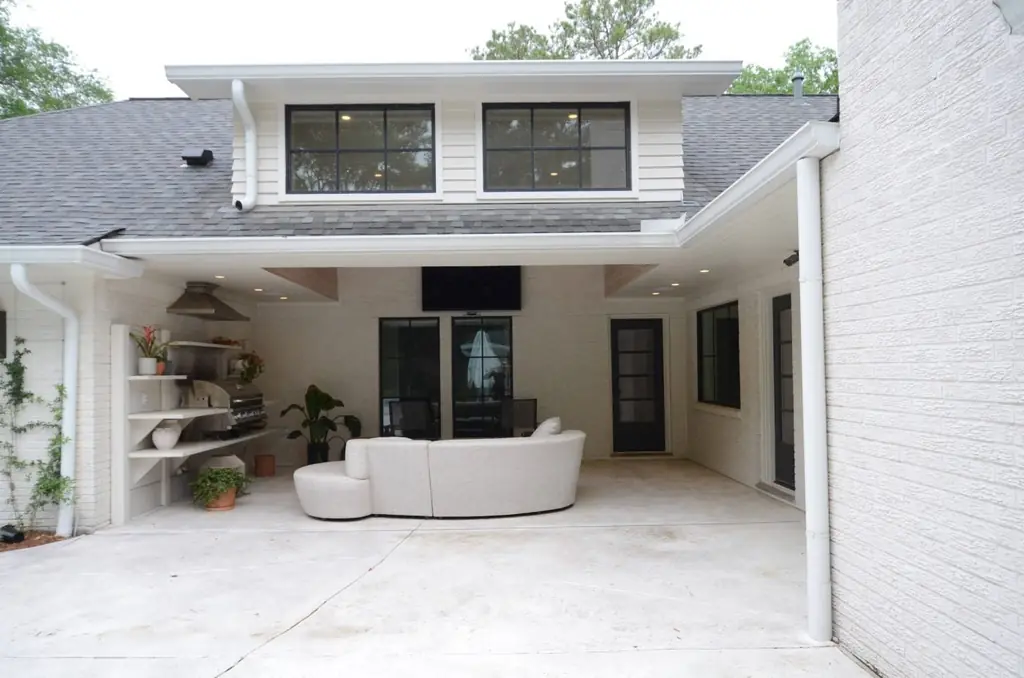
We've done this kind of work more than once, and each time it starts the same way. A homeowner is standing in a house that took on water, sometimes a few inches, sometimes several feet, and they're trying to work out whether to repair it or start over. That decision usually gets made room by room rather than all at once, and it depends on how much of the structure and the finishes actually survived.
One of our clients took twelve feet of water in his house during Hurricane Harvey. Another had a downstairs wing, laundry, a powder room, a master suite, torn out and rebuilt after the same storm, along with expanding the garage. A third client's history with us goes back to Hurricane Ike in 2008, then four bathrooms, then a full kitchen remodel, then a complete ground-floor rebuild after Harvey. Flood recovery tends not to be a single job. It's often the start of a longer relationship with a house that keeps needing attention as storms keep coming.
What a ground-floor rebuild actually covers
When water gets into a house, the damage is rarely just cosmetic. Drywall, insulation, and often subfloor have to come out, not just be dried and repainted, because trapped moisture behind a wall becomes mold months later if it isn't fully removed. That means a flood rebuild is closer to a gut renovation than a repair job, even when the exterior walls and the roof are fine.
- Full demolition of affected drywall, insulation, and flooring down to the studs and subfloor
- Rebuilding interior walls, electrical, and plumbing that ran through the flooded zone
- Elevated construction on new additions or rebuilt sections, where it makes sense for the site
- Safe rooms built into the new structure
- Whole-house generators, so the next outage doesn't leave the house without power for days
One client's home is now one hundred percent ADA compliant with an elevator, a whole-house generator, and safe rooms, built so the family can stay in the house long term regardless of what the weather does or how their own mobility changes. That's not unusual for this kind of project. Once a house has flooded once, most owners want the rebuild to leave it better prepared than it was, not just repaired back to where it started.
The part that matters most: who's building it
One of our clients put it plainly: you have to be a good builder to live where you build. After Harvey, he told us he'd always said he'd rather live in a refrigerator box under a freeway than build a house, and then he built one anyway, with us, because we live in the same neighborhood we work in. Two years later, by his account, there isn't a wall out of plumb in the house.
That's not a small thing after a flood. A rebuild happens while a family is displaced, stressed, and often dealing with insurance at the same time as construction. Communication and follow-through matter as much as the framing does. One client of ours, across four separate projects and fourteen years with us, has said the work has never come without high quality and clear communication throughout.
Why the same team keeps coming back
It's worth noting that a flood rebuild isn't a job that ends when the drywall goes back up. Houses that have flooded once are statistically more likely to see water again, and the families we've rebuilt for tend to stay with us for the projects that follow, a kitchen a few years later, a bathroom addition, another storm response after another storm. That continuity matters, because a builder who already knows a house, where the plumbing runs, how the foundation sits, what was rebuilt and what's original, moves faster and asks fewer questions on the next project than a builder starting cold.
We hold an EPA Certified Renovator credential, which governs how work is done safely in older homes where lead paint or other hazardous materials may be present, something that comes up more often than people expect in Houston's older flood-prone neighborhoods. It's a detail that rarely gets asked about up front, but it matters once demolition actually starts.
If your house has flooded
There's no way to make this an easy process, but there is a way to make it a well-run one. The first real decision is whether the structure underneath the damage is sound enough to build back into, and that's a judgment call that should come from someone walking the house, not from a phone call. If you're looking at a rebuild, the earlier you get a builder into the house to assess what's actually salvageable, the fewer surprises show up once work has started, and the more of the rebuild can go toward making the house better prepared for next time rather than just putting it back the way it was.
Envision Design Build, (713) 789-8262
Call (713) 789-8262More articles
Designing a Home You Can Stay In
Most of the changes that let a house age with you are decisions made on paper, long before a wall goes up.
Design-Build Versus Hiring an Architect, Then a Builder
The two paths lead to the same finished house, but they get there through very different conversations about money.